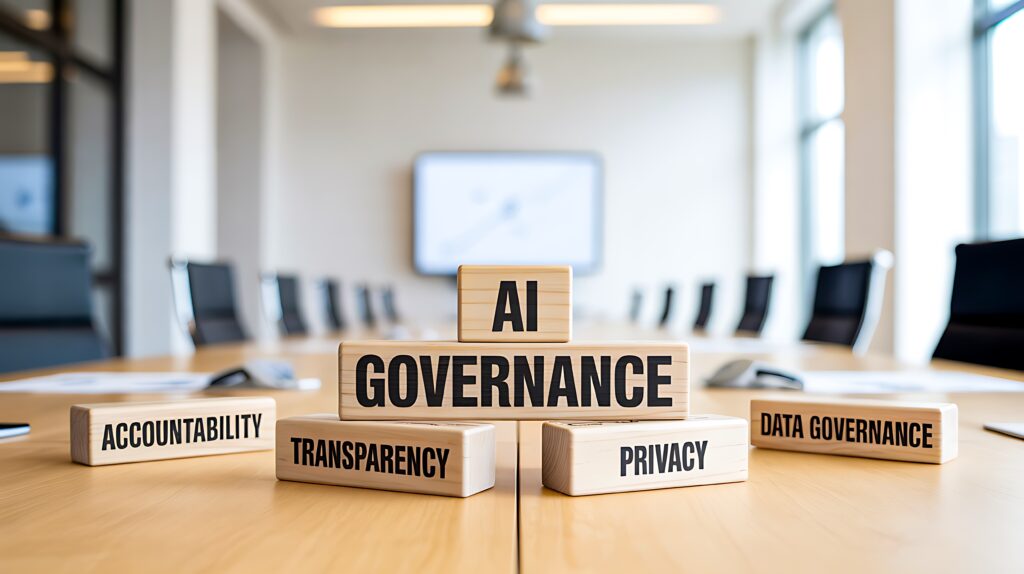
Future-Proofing Governance in an AI-Accelerated Enterprise

Governance has always evolved alongside technology. From paper records to digital repositories, from centralized systems to cloud environments, each wave of innovation has reshaped how organizations manage information risk.  The rise of enterprise AI represents another such shift, but this one is happening faster than any before it.  AI is no longer confined to experimental use cases. It is increasingly embedded in analytics tools, document workflows, enterprise search, knowledge management systems, and compliance processes. Decisions that once required human review are now supported or influenced by models that operate across vast volumes of data.  In this environment, information governance programs must adapt. Frameworks designed for slower, more predictable systems now operate in environments where data volumes expand continuously and AI-driven tools interact with information in new ways.  Future-proofing governance is not about predicting every technological development. It is about building information governance programs that can adapt while maintaining control, defensibility, and operational clarity.  Governance Must Keep Pace with the Enterprise  Historically, governance programs often moved on a slower cadence than the technologies they supported. Policies were written, approved through structured review, and revisited periodically as regulations or business needs changed.  That approach worked when systems evolved gradually.  AI changes that rhythm. Data environments grow rapidly. New tools appear quickly. Business teams adopt capabilities faster than governance policies can be rewritten.  If information governance programs operate on a slower timeline than the environments they oversee, gaps emerge. Retention schedules may not reflect new data sources. Classification logic may not align with AI-enabled content generation. Governance oversight may not account for automated decision processes.  Future-ready information governance programs must therefore operate with a structured but responsive cadence. Policies still provide the foundation, but operational processes must allow programs to adapt as technology evolves.  Information Governance Must Support AI Use of Enterprise Information  As AI capabilities expand, the connection between information governance and AI governance becomes increasingly clear.  AI models rely on enterprise information. They learn from it, analyze it, and produce outputs based on it. The quality, retention, and accessibility of that information directly affect the reliability and defensibility of AI-driven processes.  For this reason, information governance programs become even more critical in AI-enabled environments. Clear classification, defensible retention schedules, and well-defined access controls shape the data that AI systems interact with.  When those governance structures are weak or inconsistent, organizations face greater risk. AI systems may rely on incomplete, outdated, or poorly classified information. Auditability becomes more difficult. Regulatory inquiries become harder to answer.  Strong information governance therefore supports responsible AI adoption. It provides the structure that allows organizations to understand what information exists, how it is managed, and how it should be used.  Visibility Becomes a Critical Governance Capability  In traditional records management environments, governance often focused on control. Access was restricted, records were carefully managed, and processes were structured to limit risk.  AI-enabled environments introduce new dynamics. Information moves across systems, tools interact with data in automated ways, and insights are generated continuously.  In this context, visibility becomes just as important as restriction.  Organizations must be able to see how information is used, where retention rules apply, and how automated systems interact with enterprise content. Visibility enables governance teams to monitor patterns, identify inconsistencies, and respond when risks emerge.  Dashboards that track policy application, retention coverage, and exception patterns become valuable governance tools. Rather than attempting to control every interaction with information, governance teams monitor signals and intervene when necessary.  This approach strengthens oversight without slowing operational workflows.  Governance Programs Must Be Designed for Change  Information governance has traditionally emphasized stability and consistency. Retention schedules are designed carefully. Policies are reviewed through structured processes. Records management programs prioritize defensibility.  Those principles remain essential.  However, AI-enabled environments require governance programs that can adapt without losing structure. New data sources appear. New tools generate new types of content. Organizational priorities evolve.  Future-ready governance programs therefore include defined mechanisms for adaptation. Retention schedules must be reviewed regularly. Classification frameworks must account for new content types. Governance processes must address emerging AI-generated information.  Adaptation does not mean constant change. It means structured review and disciplined adjustment.  When governance programs incorporate these mechanisms, they remain aligned with evolving information environments while preserving defensibility.  The Continuing Role of Human Judgment  Despite advances in AI, governance remains fundamentally human.  Automated tools can assist with classification, discovery, and analysis. They can surface patterns across large volumes of information. They can support operational efficiency.  But governance decisions still require professional judgment.  Legal, compliance, and records management professionals determine which information constitutes a record, how long it must be retained, and how it should be managed within regulatory frameworks. AI may assist with scale, but accountability remains human.  Future-proof governance programs recognize this balance. Technology supports execution, while professionals define policy, oversight, and accountability.  A Closing Thought: Information Governance as Operational Infrastructure  For many years, information governance programs were often viewed primarily as compliance mechanisms. Their role was to document policies and support regulatory defensibility.  In an AI-accelerated enterprise, information governance becomes something more fundamental.  It becomes operational infrastructure.  Organizations that understand their information assets, apply retention consistently, and maintain visibility into how information flows across systems are better positioned to adopt AI responsibly and manage regulatory risk.  Those capabilities are not accidental. They are built through structured information governance programs that integrate policy, records management, and operational oversight.  At LexShift, we advise organizations on governance models that support sustainable information governance programs and effective records management. Our focus is helping organizations translate policy into operational practice so that governance remains aligned with evolving technology environments.  Future-proofing governance is therefore not about predicting every technological shift. It is about strengthening the information governance programs that allow organizations to manage change responsibly.  Next in the series: The evolving role of information governance professionals in the age of AI.  To explore the full series, visit lexshift.com  The information you obtain at this site, or this blog is not, nor is it intended to be, legal or consulting advice. You should consult with a professional regarding your individual situation. We invite you to contact us through the website, email, phone, or through LinkedIn.

Sustaining Momentum: Continuous Improvement and Adaptive Governance

Momentum is exciting in the early stages of transformation. There is alignment. There is energy. Executive sponsorship is visible. Early milestones are achieved and communicated. The program feels real.  Then something quieter happens.  The urgency softens. New priorities emerge. Teams turn their attention to the next initiative. Governance forums continue to meet, dashboards continue to populate, but the sense of forward motion begins to level off.  This is the moment that separates durable orchestration programs from temporary initiatives.  Sustaining momentum is not about pushing harder. It is about building the discipline to adapt.  The Natural Drift of Governance Programs  Most orchestration efforts begin with a clear catalyst. A regulatory finding. A modernization initiative. A merger. An AI deployment. The organization recognizes risk and aligns around a solution.  Once the immediate objective is achieved, the intensity often fades. Governance meetings become informational rather than decision oriented. Metrics are reviewed but not interrogated. Exception queues grow gradually. Policies remain technically in place but increasingly misaligned with evolving systems.  None of this happens dramatically. It happens incrementally.  The problem is not lack of commitment. It is lack of a structured improvement loop.  Governance, if left static, slowly detaches from operational reality. Systems change. Data volumes grow. AI models evolve. Business structures shift. Without formal mechanisms for recalibration, the orchestration model that once drove clarity can quietly become outdated.  Momentum fades not because the strategy was wrong, but because adaptation was not institutionalized.  Continuous Improvement Is a Governance Responsibility  In compliance, improvement is often treated as reactive. An audit reveals a gap. A regulator issues new guidance. A system failure exposes inconsistency.  But mature orchestration treats improvement as proactive and scheduled.  Policies should not wait for friction to be obvious. Classification models should not wait for visible error rates. Retention schedules should not sit unchanged simply because they were recently approved.  Adaptive governance requires routine evaluation. That evaluation is not about constant change. It is about asking disciplined questions on a predictable cadence:  Are controls still aligned with how the business operates?  Are AI-assisted decisions performing within acceptable thresholds?  Are exceptions pointing to systemic friction rather than isolated anomalies?  Are metrics revealing emerging patterns before they become risks?  When review becomes expected, adaptation becomes normal rather than disruptive.  Feedback Is a Strategic Asset  Operational teams experience governance friction long before leadership does. A workflow may be technically compliant but practically inefficient. A classification rule may be defensible but misaligned with how data is used.  If those insights do not travel upward through structured channels, governance models grow rigid.  Sustained momentum depends on formal feedback loops. Not informal complaints. Not periodic escalations. But defined mechanisms that allow frontline teams, system owners, and compliance professionals to surface what is working and what is not.  When governance frameworks absorb operational insight, they evolve with the business rather than resisting it.  Adaptive governance is not reactive governance. It is governance that listens.  Metrics as Early Warning Signals  Earlier in this series, we discussed measuring what matters. Sustaining momentum requires using those measurements differently.  Metrics should not exist simply to confirm compliance status. They should act as early warning signals.  A slight increase in exception rates may indicate policy friction. A slowdown in policy implementation time may signal cross-functional misalignment. A gradual drop in AI confidence scores may point to model drift.  The most mature organizations do not wait for metrics to turn red. They treat trends as invitations to recalibrate.  Momentum is preserved when data drives discussion and discussion drives refinement.  Reassessing Risk in a Changing Environment  The regulatory and technological landscape is not static. Privacy regimes expand. Enforcement priorities shift. AI governance expectations evolve. Business models change through acquisition or innovation.  An orchestration model that was calibrated two years ago may not reflect today’s risk profile.  Sustained momentum requires periodic reassessment of foundational assumptions. Risk prioritization frameworks should be revisited. Retention logic should be reviewed against emerging regulatory guidance. AI oversight mechanisms should be tested against new use cases.  Without this reassessment, governance remains compliant with yesterday’s expectations.  Adaptive governance keeps compliance aligned with tomorrow’s realities.  Stability and Flexibility Can Coexist  There is a natural tension in governance. Too much change undermines trust and predictability. Too little change introduces exposure.  The balance lies in structured adaptation.  Formal version control, documented rule adjustments, transparent approval processes, and clear communication create stability. At the same time, scheduled review cycles and controlled recalibration create flexibility.  Governance does not need to be rigid to be defensible. It needs to be disciplined.  When adaptation is embedded into process, flexibility strengthens rather than weakens control.  Sustaining Capability, Not Just Controls  Finally, momentum depends on people.  Technology enables orchestration. Frameworks structure it. But long-term sustainability depends on organizational capability.  Teams must understand not only how governance works, but why it evolves. Legal and compliance professionals must grow comfortable with AI-enabled workflows. IT must appreciate policy intent, not just system configuration. Business leaders must recognize their role in accountability.  When governance knowledge expands beyond a single function, momentum becomes distributed. Distributed momentum is resilient.  A Closing Thought: Discipline Sustains Energy  Executive sponsorship initiates change. Operational execution creates traction. Continuous improvement preserves value.  Sustained orchestration is not defined by the enthusiasm of its launch, but by the discipline of its evolution.  Organizations that thrive in complex regulatory and technological environments are those that treat governance as an adaptive capability. Structured. Measured. Reviewed. Refined.  Not constantly changing but constantly learning.  At LexShift, we help organizations embed that discipline into their orchestration programs, aligning control with flexibility and execution with foresight.  Next in the series: Future-proofing governance in an AI-accelerated enterprise.  To explore the full series, visit lexshift.com  The information you obtain at this site, or this blog is not, nor is it intended to be, legal or consulting advice. You should consult with a professional regarding your individual situation. We invite you to contact us through the website, email, phone, or through LinkedIn.

From Sponsorship to Momentum: Turning Executive Alignment into Operational Execution

Executive sponsors typically frame orchestration in broad, outcome-oriented terms:  These objectives are directionally clear. What is often missing is the connective tissue between strategy and daily execution.  Operational momentum requires more than agreement. It requires:  Sponsorship sets the direction. Enablement builds the system that carries it forward.  When orchestration is translated into specific, visible operational steps, executive intent becomes embedded in how the organization functions.  Make Sponsorship Visible Throughout the Organization  Executive sponsorship has the greatest impact when it is consistently reinforced.  Too often, support is announced once, then assumed to be understood. But operational teams need clarity around why the initiative matters and how it connects to enterprise strategy.  Practical steps include:  Visibility creates legitimacy. Legitimacy drives adoption.  When managers understand that orchestration is tied to executive priorities, resistance decreases and alignment increases.  Create a Structured 90-Day Momentum Plan  Early execution matters. The period immediately following executive endorsement is critical.  A defined 90-day plan helps convert strategic alignment into visible progress. This plan should focus on tangible, achievable outcomes that reinforce credibility.  Examples may include:  The objective is not scale in the first quarter. The objective is traction.  A structured cadence of updates to executive sponsors builds confidence. Progress reports should emphasize measurable outcomes, lessons learned, and next-phase priorities.  Momentum builds when stakeholders can see movement.  Align Incentives Across Functions  Orchestration does not belong to a single team. It touches legal, compliance, IT, records management, data teams, and business leadership.  Executive sponsorship must translate into distributed accountability.  Consider aligning orchestration objectives with:  When orchestration is embedded into team objectives, it stops being viewed as additional work and becomes part of how success is measured.  Clear escalation pathways are equally important. When obstacles arise, teams need structured channels to resolve issues without stalling progress.  Cross-functional alignment converts executive intent into coordinated action.  Establish Governance Cadence and Reporting Discipline  Momentum requires rhythm.  Without structured oversight, even well-funded initiatives drift. Establish recurring governance forums that focus specifically on orchestration progress.  This may include:  These mechanisms reinforce accountability and keep the initiative visible at the right levels of leadership.  Over time, orchestration reporting should integrate into broader enterprise reporting structures, signaling that it is part of the organization’s operational fabric.  Balance Control and Agility  Executive sponsors often want speed. Operational teams often want clarity. Orchestration must deliver both.  To maintain momentum:  Agility without structure introduces risk. Structure without flexibility slows progress. Sustained momentum requires balance.  Translate Early Wins into Institutional Commitment  Executive sponsorship becomes durable when it is reinforced by visible success.  Capture and communicate:  These outcomes should be framed in business terms, not technical ones. The goal is to demonstrate that orchestration is not simply a compliance enhancement. It is an operational advantage.  When leadership sees that orchestration contributes to resilience and performance, continued investment becomes easier to justify.  Institutionalize the Operating Model  The final stage of momentum is institutionalization.  Orchestration should eventually become:  At this point, the program no longer depends on sustained executive attention to survive. It has become part of the organization’s compliance infrastructure.  This is the shift from initiative to capability.  A Closing Thought: Momentum Is Built, Not Assumed  Executive sponsorship opens the door. Operational discipline keeps it open.  Sustained momentum requires clarity, structure, transparency, and distributed ownership. It requires treating orchestration not as a temporary project but as an evolving enterprise function.  Organizations that succeed are not those that simply secure executive approval. They are the ones that build systems that convert approval into measurable, repeatable action.  At LexShift, we work with organizations to translate executive alignment into structured execution, helping teams sustain compliance transformation long after the initial endorsement.  Coming next: Sustaining momentum through continuous improvement and adaptive governance.  To explore the full series, visit lexshift.com  The information you obtain at this site, or this blog is not, nor is it intended to be, legal or consulting advice. You should consult with a professional regarding your individual situation. We invite you to contact us through the website, email, phone, or through LinkedIn.

Making the Case: How to Frame Orchestration for Executive Audiences and Build Support for Long-Term Investment 

At some point, every orchestration effort reaches the same inflection point.  The pilot works. Early metrics look promising. Teams see the operational benefit. But the next step requires something more: executive sponsorship, funding, and a commitment to treat orchestration as a long-term capability.  That is where framing matters.  Executives are not looking for more tools or more technical detail. They are focused on risk exposure, operational efficiency, regulatory defensibility, and enterprise value. To build sustained support, orchestration must be positioned in that context.  Shift the Conversation from Tools to Risk and Value  One of the most common missteps is presenting orchestration as a technology initiative. While AI, automation, and system integration are part of the solution, they are not the headline.  Executives respond to questions like:  Frame orchestration as a control environment that scales with the business. The focus should be on outcomes, not features.  Quantify What Matters  Executive audiences expect clarity. That means translating governance impact into tangible metrics.  Examples include:  Tie these metrics to business priorities such as cost containment, audit readiness, digital transformation, and operational agility.  When possible, present baseline data and projected improvement. Even directional improvements demonstrate maturity and accountability.  Position Orchestration as Infrastructure, Not Initiative  Transformation programs receive funding because they are seen as infrastructure. They enable growth, scalability, and resilience.  Orchestration should be framed the same way.  It is not a one-time remediation effort. It is the operating layer that connects policy, systems, and decision-making. Without it, compliance becomes reactive and fragmented.  With it, compliance becomes predictable and defensible.  This distinction matters when requesting long-term investment.  Highlight the Cost of Inaction  Executive framing should also address the alternative.  Without orchestration:  The cost of rework, reputational risk, and operational drag often exceeds the investment required to build orchestration properly.  Build Cross-Functional Alignment Before the Executive Pitch  Strong executive proposals are rarely built in isolation.  Align legal, compliance, IT, and business leaders around:  When executives see cross-functional consensus, confidence increases. The proposal moves from being a departmental request to an enterprise initiative.  A Closing Thought: Speak the Language of the Boardroom  Executives think in terms of scale, sustainability, and risk-adjusted return.  Orchestration should be positioned as:  When framed correctly, orchestration is not seen as additional overhead. It becomes a strategic investment in clarity, control, and long-term value.  At LexShift, we help organizations articulate that case clearly and structure programs that support both immediate execution and sustained executive confidence.  Coming next: Turning executive sponsorship into operational momentum.  To explore the full series, visit lexshift.com  The information you obtain at this site, or this blog is not, nor is it intended to be, legal or consulting advice. You should consult with a professional regarding your individual situation. We invite you to contact us through the website, email, phone, or through LinkedIn.

From Project to Program: Building Orchestration as a Sustainable, Enterprise-Wide Function

Many organizations begin their compliance orchestration journey in response to a clear need: a cloud migration, a regulatory update, a policy gap, or a long-overdue retention cleanup. These are often structured as standalone projects and are limited in scope, tightly scheduled, and outcome specific.  Projects are essential for building traction. They offer a practical starting point and can help demonstrate real value in a short time. But orchestration cannot remain confined to isolated initiatives.  To deliver lasting impact, compliance orchestration must grow into something more: a sustainable, enterprise-wide function that supports the business continuously, not just occasionally. That shift, from one-time effort to ongoing capability, is where many organizations struggle, and where the greatest value lies.  Why Projects Alone Aren’t Enough  Projects are good at solving a problem. But without broader structure and continuity:  This creates a recurring pattern: solve one issue, only to see compliance drift as teams and systems evolve. The result is inefficiency, fragmentation, and ultimately, greater exposure.  Orchestration must be designed to outlive any one project. It should become part of the way your organization functions—cross-functional, scalable, and resilient over time.  From Proof to Program: Five Building Blocks  1. Establish a Central Framework  Start by creating a repeatable structure that can be used across initiatives. This includes:  Instead of starting from scratch with each new initiative, teams can plug into an orchestration model that is already aligned with enterprise goals.  2. Design for Change  Policies and systems will not stay static. Build orchestration processes that assume change is constant.  This means:  View compliance elements as managed assets, updated through structured review and documented change control. This approach supports consistency, defensibility, and long-term alignment with business priorities.  3. Embed Metrics and Monitoring  Programs only sustain when progress is visible. Track both technical performance and behavioral adoption.  Example metrics might include:  These metrics help validate the program’s value and support continuous improvement.  4. Distribute Ownership  Orchestration works best when ownership is shared. Compliance is not a task for one team to carry alone.  Encourage active roles across:  This distributed model reduces bottlenecks and drives alignment across stakeholders.  5. Fund the Capability  Finally, orchestration must be treated as a strategic function and not a temporary fix. That means:  Building orchestration into your compliance and risk infrastructure pays dividends over time by avoiding rework, enabling faster response to change, and reducing overall exposure.  A Closing Thought: Orchestration is a Long Game  Organizations that succeed with compliance at scale are not the ones that chase perfect results in single projects. They are the ones that take a programmatic view—creating sustainable, flexible structures that allow compliance to scale, evolve, and embed itself into day-to-day operations.  Orchestration is not just about solving today’s challenge. It is about building the capability to manage tomorrow’s complexity with clarity, consistency, and confidence.  At LexShift, we work with clients to make this shift—helping teams operationalize compliance not as a checklist, but as a core business function.  Coming next: Making the Case—How to Frame Orchestration for Executive Audiences and Build Support for Long-Term Investment  To explore the full series, visit lexshift.com  The information you obtain at this site, or this blog is not, nor is it intended to be, legal or consulting advice. You should consult with a professional regarding your individual situation. We invite you to contact us through the website, email, phone, or through LinkedIn.

Built In, Not Bolted On: Why Orchestration Belongs in Every Transformation Program

From privacy and cloud migrations to mergers, acquisitions, and enterprise modernization, organizations are investing heavily in transformation. These initiatives promise agility, innovation, and resilience. But they also create pressure on compliance, risk, and governance teams to adapt quickly, often in environments that are still shifting.  Too often, those teams are brought in late. Policies are rewritten after implementation. Data is moved before retention schedules are updated. Controls are applied retroactively, and often inconsistently.  This reactive approach is no longer sustainable.  If transformation is meant to improve how the business operates, then governance must evolve in parallel. Compliance cannot afford to play catch-up. It must be part of the process from the beginning. That is where compliance orchestration comes in.  Transformation Without Orchestration Leaves Risk on the Table  Transformation efforts often focus on improving speed, scale, and customer experience. But without orchestration, those benefits come with hidden risks:  In contrast, when orchestration is embedded into the design and execution of transformation programs, compliance becomes a source of clarity and coordination. It shifts from being reactive to enabling strategic change.  How Orchestration Supports Real Change  Compliance orchestration provides the connective tissue between transformation goals and operational reality. It introduces:  Whether the change is driven by regulatory pressure, operational redesign, or acquisition activity, orchestration makes compliance portable, adaptive, and measurable.  Use Cases: Where Orchestration Makes the Difference  Privacy Program Maturity  As privacy laws expand and data subject rights become more complex, orchestration supports scalable classification, access control, and lifecycle management across disparate environments.  Cloud Migrations  Moving to the cloud is not just technical. It requires mapping compliance policies to new architectures. Orchestration helps maintain consistent controls across both legacy and cloud platforms.  Mergers and Acquisitions  M&A events create immediate governance complexity. Orchestration enables faster integration of systems, records, and retention logic while maintaining legal defensibility.  System Modernization or Platform Consolidation  When replacing or consolidating applications, orchestration ensures that policies and workflows remain aligned. This prevents gaps in retention, access, or auditability during and after the transition.  A Closing Thought: Make Compliance a Core Capability, Not a Checkpoint  Transformation is not only about changing systems. It is also about how decisions are made and sustained as the organization evolves.  Orchestration helps organizations embed compliance into the design and execution of transformation—not as a step at the end, but as a capability that scales with change. It minimizes rework, reduces exposure, and creates transparency across functions.  LexShift works with organizations to embed orchestration into the architecture of change, enabling teams to move faster without losing clarity or control.  Coming next: From project to program—how to build orchestration as a sustainable, enterprise-wide function.  To read the full series or learn more, visit lexshift.com The information you obtain at this site, or this blog is not, nor is it intended to be, legal or consulting advice. You should consult with a professional regarding your individual situation. We invite you to contact us through the website, email, phone, or through LinkedIn.

From Siloed to Shared: Aligning Legal, Compliance, and IT for Orchestration Success

Orchestration does not belong to a single function. It depends on all of them.  Yet many governance efforts still run into the same roadblocks:  When orchestration is treated as the responsibility of one team, progress stalls. The friction is not just operational. It is strategic.  To operationalize governance at scale, organizations need shared ownership, coordinated execution, and alignment between legal, compliance, IT, and business teams.  This post outlines how to create that alignment without adding unnecessary complexity or slowing down decision-making.  Governance is No Longer a Department; It is a Capability  Every function plays a role in making compliance work at scale:  When these groups are not coordinated, the result is fragmented execution. Policies are developed without operational input. Systems are configured without legal context. Audits expose gaps no one saw coming.  Orchestration addresses this by introducing shared frameworks, repeatable processes, and feedback loops that involve each function in the right conversations at the right time.  Three Practices for Cross-Functional Alignment  1. Establish a Common Language  Policy and process often break down at the point of translation. Legal speaks in obligations. IT speaks in systems. The business speaks in workflows.  Orchestration helps bridge these differences by standardizing how key elements are defined:  A shared vocabulary reduces confusion, accelerates execution, and helps everyone stay aligned on outcomes.  2. Define Shared Success Metrics  Each function tracks different objectives. Legal may focus on defensibility. Compliance may prioritize audit readiness. IT is often measured on uptime and efficiency.  Orchestration works best when all parties see their role in a shared objective. Examples include:  Shared metrics turn alignment into action and make progress visible.  3. Build Lightweight, Repeatable Governance Forums  Cross-functional governance does not mean adding more meetings. It means creating the right ones.  Establish small, focused working groups with clear roles:  These should be embedded into the orchestration process, not treated as side conversations that follow after issues emerge. When governance becomes part of daily execution, alignment becomes sustainable.  A Closing Thought: Alignment is the Infrastructure of Agility  Sustainable compliance orchestration is not about locking everything down. It is about building the infrastructure—shared language, shared priorities, and shared accountability—that allows policy to move from strategy to execution without getting lost in translation.  At LexShift, we see this shift gaining momentum. Governance is evolving from a siloed effort into an enterprise capability powered by AI, supported by aligned teams, and grounded in operational feedback.  Coming next: Why orchestration belongs in transformation programs, from privacy and cloud to M&A and modernization.  To explore the full series, visit lexshift.com  The information you obtain at this site, or this blog is not, nor is it intended to be, legal or consulting advice. You should consult with a professional regarding your individual situation. We invite you to contact us through the website, email, phone, or through LinkedIn.

Integrating AI into Governance: How to Do It Responsibly and Effectively 

The promise of AI in compliance is clear: faster classification, smarter workflows, better visibility across sprawling data environments. But as AI tools evolve, so does the pressure to “plug them in” quickly—often without the structures needed to verify that outputs are consistent, explainable, and defensible.  Governance leaders are right to be cautious. AI should not replace judgment. It should enhance it.  This article explores how to integrate AI into governance workflows in a responsible, effective, and sustainable way, building on the foundational principles of orchestration.  AI + Governance: A High-Leverage Combination  AI can help solve many of the problems that governance teams face every day:  But like any automation, AI needs context. Without a clear governance framework, AI simply produces faster decisions—not better ones.  The opportunity lies in pairing AI’s speed and scale with governance’s structure and oversight.  Five Principles for Responsible AI Integration in Governance  1. Start with Policy, Not the Model  Before applying AI to a compliance process, be clear about:  AI is not a substitute for policy. It is a tool to apply policy more consistently and efficiently. That means governance teams should guide AI implementation—not react to it after the fact.  2. Focus on Use Cases with Clear Boundaries  AI is most effective when used on well-defined tasks with clear input and expected outcomes. Start with use cases like:  These use cases allow teams to build confidence, evaluate performance, and refine controls before expanding to more complex applications.  3. Keep Humans in the Loop  Human oversight is not optional. Even when AI is highly accurate, it can still misclassify, miss nuance, or drift over time.  Effective governance includes:  The goal is not to second-guess the AI, but to make sure its outputs stay aligned with policy intent.  4. Document the Decision Path  Explainability matter, especially in legal, regulatory, or audit contexts. Any AI-driven governance decision should leave a trail:  This documentation supports defensibility and helps teams improve models over time.  5.  Establish a Lifecycle Model  AI governance is not a one-time deployment. It requires ongoing care:  Build these checkpoints into the orchestration model so AI evolves alongside the business.  AI as a Governance Enabler, Not a Risk Multiplier  When implemented with the right oversight, AI strengthens governance:  But when AI is added without clear policy, accountability, or control, it creates the illusion of compliance—speed without structure, automation without understanding.  At LexShift, we help organizations integrate AI into governance processes in a way that supports both performance and defensibility. The key is starting with what matters: policy clarity, organizational alignment, and practical oversight.  Coming next: How to align legal, compliance, and IT teams around a shared orchestration strategy.  To learn more, visit lexshift.com  The information you obtain at this site, or this blog is not, nor is it intended to be, legal or consulting advice. You should consult with a professional regarding your individual situation. We invite you to contact us through the website, email, phone, or through LinkedIn.

Governance at Speed: How to Maintain Control While Enabling Agility

In many organizations, governance and agility are treated as tradeoffs. The assumption is that one slows the other down—that the more structured your governance, the harder it is to move quickly, innovate, or respond in real time.  But the reality is different. When governance is designed to be operational, not ornamental, it doesn’t slow teams down. It gives them clarity. It reduces friction. And it builds trust that decisions can be made—and acted on—without increasing risk.  This post explores how to structure compliance governance for environments that demand speed, change, and adaptability.  The False Choice Between Governance and Agility  The perception that governance is at odds with agility often stems from legacy models:  These structures create lag. They frustrate teams. And they reinforce the idea that governance is a gate, not a guide.  But agility without governance is just improvisation. And governance without agility becomes irrelevant. The key is to design a model that does both—at scale.  Design Principles for Governance That Moves with the Business  1. Clarity Over Complexity  When policies are vague, people wait for interpretation. When they’re overly detailed, they break down under pressure. Striking a balance means writing governance clearly, concise, and actionable—especially when speed matters.  Effective orchestration relies on well-defined:  Clarity doesn’t come from more documentation. It comes from alignment.  2. Pre-Positioned Controls  Agility is not about making decisions faster—it’s about making decisions that don’t have to be re-decided.  A sustainable governance model builds decision points into systems, not after them:  When teams don’t have to stop and ask for permission every time, they move faster—with control.  3. Distributed Accountability  Centralized oversight is important, but operational agility depends on empowering people closest to the work.  That means:  Distributed accountability supports both responsiveness and consistency.  4. Modular Policy Architecture  Governance that’s tightly coupled to a single system, geography, or team doesn’t scale—or flex. Instead, build modular policies that can be reused, reconfigured, or extended.  For example:  A modular approach allows orchestration to evolve without starting over.  5. Continuous Feedback Loops  Speed requires confidence. And confidence comes from data.  Governance at speed depends on:  It’s not about locking things down. It’s about creating enough awareness to know when to adjust and enough control to do it quickly.  Closing Thought: Control Without Bottlenecks  Speed is not the enemy of governance. It’s the test of it.  When governance is designed to support execution—rather than restrict it—it becomes a force multiplier for agility. Teams can move fast, make decisions, and adapt to change without creating chaos or compliance gaps.  At LexShift, we help organizations design governance that scales with complexity and flexes with change—so they can move faster, with more confidence and less risk.  Next in the series: Integrating AI into governance processes—how to do it responsibly and effectively.  To explore the full series or learn more, visit lexshift.com/lexshift_staging/ The information you obtain at this site, or this blog is not, nor is it intended to be, legal or consulting advice. You should consult with a professional regarding your individual situation. We invite you to contact us through the website, email, phone, or through LinkedIn.

Orchestrating Across Complexity: Supporting Compliance in Decentralized Environments

In theory, compliance orchestration sounds straightforward: align systems to policy, automate where possible, and embed oversight. But in practice, many organizations operate in environments where governance authority, data ownership, and infrastructure are decentralized. Business units have their own systems. Global regions follow different regulatory frameworks. Teams apply policies inconsistently—or not at all. This is where orchestration shows its real value. And also, where it faces its biggest challenges. In this article, we explore how to make orchestration work across complex, distributed environments without relying on top-down control. Decentralization Is the Default, Not the Exception For many organizations, decentralization is not a temporary state. It is how they’re structured. Growth through acquisition, global operations, matrixed accountability—these create necessary autonomy, but also uneven compliance maturity and risk visibility. Trying to force a single system or policy across all entities often leads to friction, noncompliance, or quiet workarounds. A more sustainable approach is to orchestrate with the environment, not against it—by aligning governance objectives with operational realities. Five Ways to Support Orchestration in Decentralized Settings 1. Establish a Federated Governance Model Rather than centralizing every decision, define a shared governance framework with clear local responsibilities. This balance builds local accountability while keeping alignment with enterprise goals. 2. Use Technology to Enforce Policy, Not Just Publish It In decentralized environments, policies often exist—but enforcement is inconsistent. Orchestration helps bridge that gap by turning policy into action. Technology should not depend on centralization. It should support compliance where the data lives. 3. Build Reusable Frameworks, Not One-Off Solutions Avoid customizing workflows for every department or region. Instead, define modular templates that can be tailored without starting from scratch. Examples include: This approach reduces overhead while still respecting local nuance. 4. Create Visibility Without Micromanagement Oversight in decentralized environments often fails because it depends on manual reporting or reactive audits. Instead, focus on building visibility into the orchestration layer itself: Transparency supports better conversations between centralized and local teams. 5. Invest in Relationships, Not Just Roles No model works without trust. In decentralized environments, orchestration depends as much on relationship-building as it does on systems. Sustainable orchestration is collaborative, not prescriptive. Closing Thought: Centralized Control Is Not the Goal The goal of compliance orchestration is not to centralize control. It is to ensure that policies are consistently applied, risks are visible, and actions are defensible—no matter how complex or distributed the organization becomes. At LexShift, we help clients build orchestration programs that work with complexity, not against it. That includes strategies for scaling policy enforcement, improving visibility, and enabling collaboration across diverse environments. Coming next: Governance at speed—how to maintain control while enabling agility. To learn more, visit lexshift.com/lexshift_staging/. The information you obtain at this site, or this blog is not, nor is it intended to be, legal or consulting advice. You should consult with a professional regarding your individual situation. We invite you to contact us through the website, email, phone, or through LinkedIn.